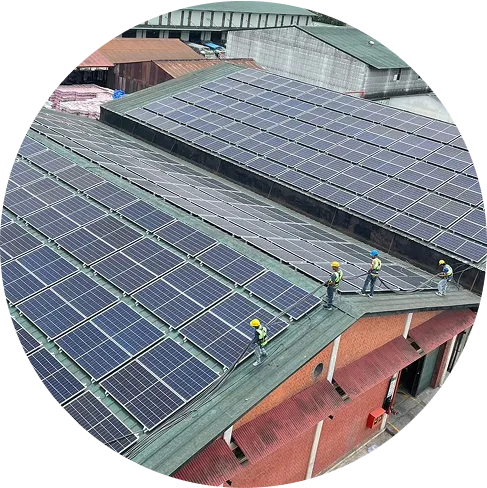
Energy security has become a fourth and perhaps most powerful driver behind industrial solar adoption in Bangladesh. Here is what it is doing to our pipeline, what it means for early investors in ORE II, and why now is the moment to move from interest to commitment.
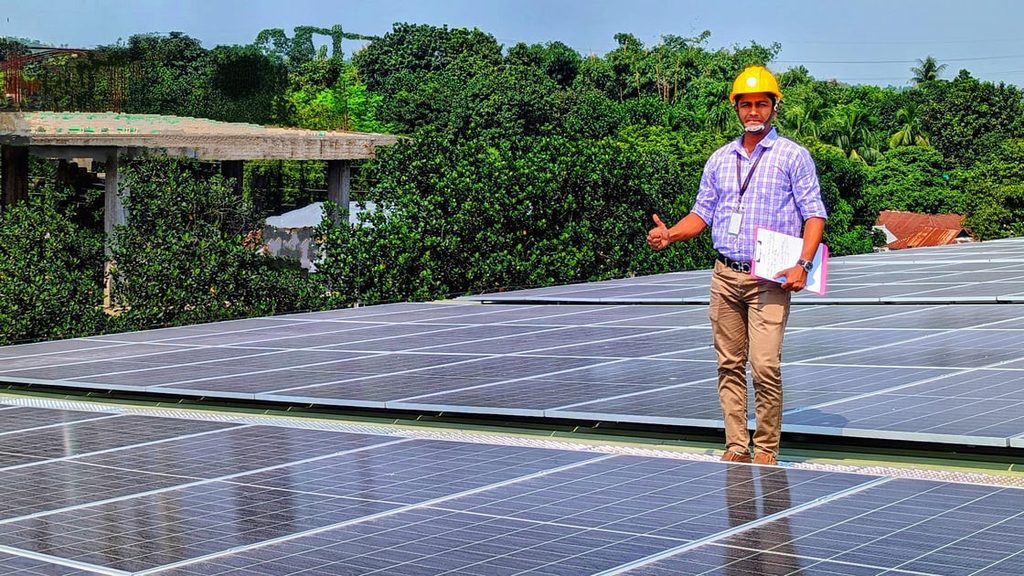
If you have been following ORE II, this article explains how our market has moved from an attractive opportunity to fund a growth market to a huge opportunity to participate in a strongly growing market. And, if the case below holds up, I will be asking you to move from interest to commitment while the early-investor incentive is still available.
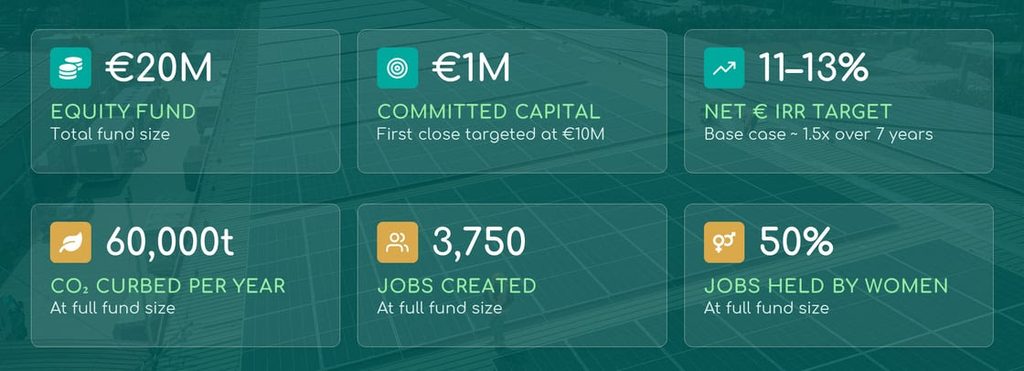
ORE II finances the decarbonisation of Bangladesh’s USD 50 billion garment and textile sector through rooftop solar delivered to factories at no upfront cost, providing roughly 20% savings on energy bills. This is a large, recognisable industry with a structural energy problem.
This summer, the demand side of the problem changed shape, and the opportunity for investors changed with it.
Until 2026, the investment case rested on three solid drivers:
- Economics: Solar delivers power to factories below grid cost.
- Market access: Decarbonisation is becoming a condition of supplying European buyers.
- Brand commitments: International brands are pushing for Scope 3 reductions.
All three continue to strengthen. This summer, a fourth emerged, and it’s the one moving buyer behaviour fastest.
Energy Security
Bangladesh has just been through the worst energy shortage in its recent history caused by the closure of the strait of Hormuz. At the peak in April, the grid ran a shortfall approaching 2,500 MW against demand.
The country needs around 3,800 million cubic feet of gas a day; domestic fields now supply roughly 1,600, and the balance depends on imported LNG exposed to global prices and geopolitics.
Simultaneously, the grid relies on coal for nearly 25% of its electricity generation, requiring roughly 20 million tonnes of coal annually – almost all of which is imported.
2,500 MW
Peak grid shortfall against demand, April 2026
~400
Garment factories closed over three years, as per BGMEA
The effect on the garment sector has been direct and painful. Industry bodies estimate that more than 1,000 factories across the main manufacturing belts were cut to two or three hours of daily production this summer, with sector capacity down 20–30% and diesel bills increasing 110% from roughly EUR 135 to EUR 280/day.
For a manufacturer, that fundamentally reframes the thinking around energy security. Renewable energy is no longer principally a cost saving or a compliance item. It is whether the line runs.
The government has moved, and intends to move further
Tax and import-duty reforms supporting renewable energy are already in place, and we expect energy security to stay high on the agenda to further accelerate the shift to renewables.
I discussed this recently with Ashik Chowdhury, Executive Chairman of Invest Bangladesh. On the shortages of this summer his message was plain:
“Not again a summer like this.”
– Ashik Chowdhury, Executive Chairman, Invest Bangladesh in conversation with Willem Grimminck
He was clear that he intends to use what is within his power to prevent a repeat.
The garment industry is now demanding what we finance
The clearest evidence is not policy. It is that BGMEA, the garment manufacturers’ own association, has formally asked the government for import-duty relief on solar panels and battery storage so that members can keep producing through outages. The buyers of rooftop solar are publicly lobbying for it.
We see the same thing in our own pipeline. Our Bangladesh pipeline now includes a signed 24 MW transaction, with further projects moving behind it.
We are already there, which is why we can be selective
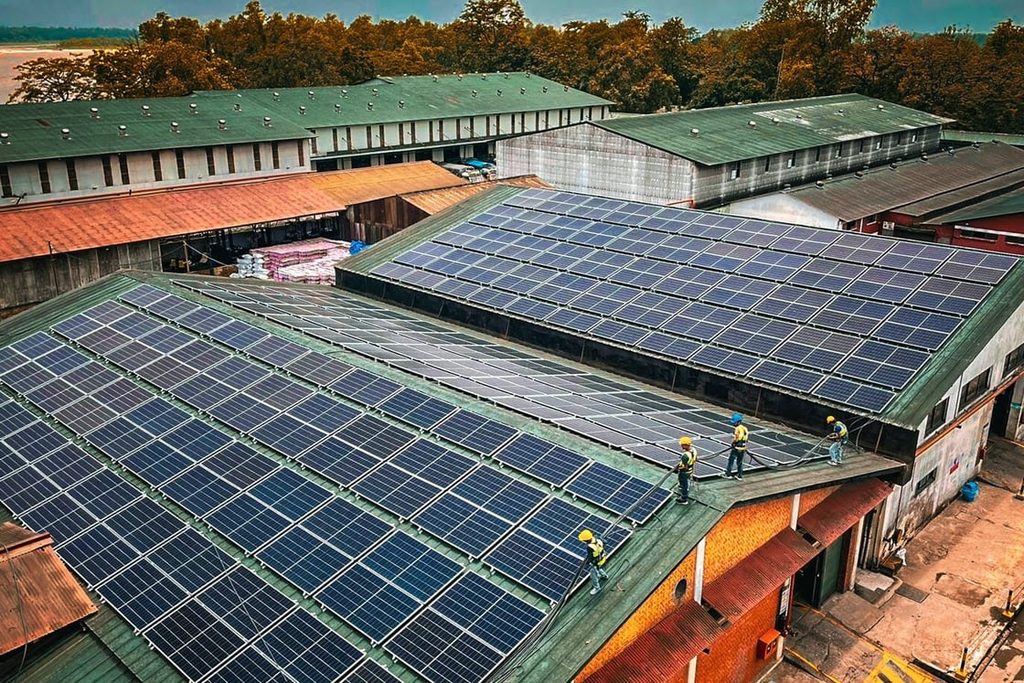
OneTrueValue is not entering Bangladesh because the market has suddenly become attractive. OneTrueValue is a long-standing partnership between One to Watch and Truvalu, with a dedicated organisation and asset-management teams in both home markets, Bangladesh and Nepal:
- Track Record: 40+ solar assets financed; 20+ MW solar installed; ORE I fully deployed.
- Capital Raised: EUR 3M+ local debt, EUR 5.5M+ equity, ~EUR 300K ESCO-level grants.
- Credit Quality: Class A clients (Cortez Apparel, Aswad Composite Mills, The Soaltee, Red Bull Nepal); minimal defaults.
- Ecosystem Partners: Bestseller, SOLshare, Gham Power, IDCOL, SDC, Powertrust.
That track record matters most in a market moving this fast, because high demand lets us choose the best deals. The factories closing in Bangladesh are the ones that could not solve the energy supply challenge at a viable cost. The factories signing long-term solar agreements are the exporters that plan to still be here in twenty years. Those are the counterparties we underwrite.
We are not trying to finance every available megawatt; we are building a portfolio of assets with strong counterparties, contracted savings and measurable emissions reductions.
A limited incentive for early investors
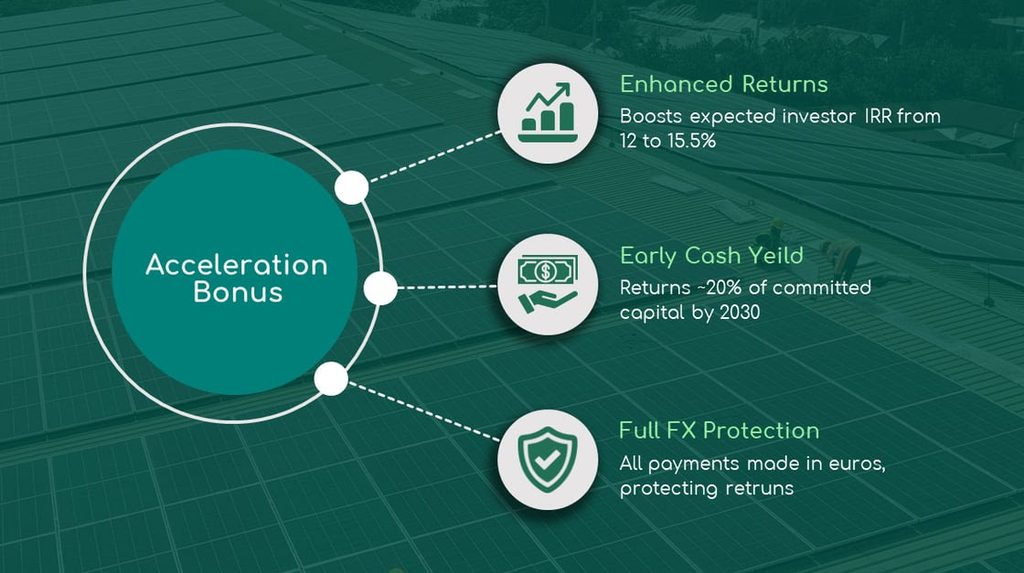
OneTrueValue is offering an Acceleration Bonus of €1 million on top of base returns for the first €5 million committed, underwritten by the Embassy of Switzerland in Bangladesh.
The bonus will be paid in four annual instalments of €250,000 from 2027 to 2030, distributed pro rata across qualifying commitments, with roughly 20% of committed capital returned within the first four years.
The final instalment is linked to operational performance, and the allocation is filled in order of commitment, once the €5 million threshold is reached, the incentive is no longer available.
ORE II at a glance
What I am asking
If ORE II has been on your watchlist, this is the moment to move from interest to commitment, not because a decision should be rushed, but because the pipeline is full with opportunity and is converting faster than at any point in our history. Also, the early-investor incentive is ready to be applied.
I would ask you to email me directly at willem@onetowatch.nl and:
– Request the Acceleration Bonus memo and the full investor deck.
– Or let’s meet up between today and the end of October.
I will take you through the pipeline deal by deal, including the 24 MW transaction, and you can test the underwriting directly.
If neither is right yet, the most useful reply is a single line: what would need to be true for ORE II to be a yes? I would rather know the real obstacle than simply keep you on a distribution list and try to guess your constraint.
We have spent a decade building the platform. Now that market forces are truly aligned behind us, we are keen to scale it.